New in Chargebee: Explore Reveal and understand your payment performance end-to-end.Try Now
Docschargebee docs
HomeBillingCPQPaymentsRevRecGrowthReveal
Support

Product Updates


  • Release Notes

Getting Started


  • Overview
  • Chargebee Billing Data Centers
  • Object Relationship Model
  • Understanding Sites
  • Chargebee Tech Glossary
  • Articles and FAQ

Implementing Chargebee


  • Implementation Guide
  • Go-live Checklist
  • Articles and FAQ

Agentic AI


  • Chargebee Copilot
  • Catalog Setup Assistant
  • MCP Servers

Developer Resources


  • Developer Resources Overview
  • API Explorer
  • Articles and FAQ

Chargebee Apps


  • Chargebee Apps CLI Developer Guide

Product Catalog


  • Product Catalog Overview
  • Coupons
  • Articles and FAQ

Subscriptions


  • Working with Subscriptions
  • Billing
  • Orders
  • Articles and FAQ

Customers


  • Managing Customers
  • Account Hierarchy
  • Email Notifications
  • Branding
  • Configure Multiple Languages
  • Articles and FAQ

Entitlements


  • Entitlements Overview
  • Features Overview
  • Feature Management
  • Managing Product Entitlements
  • Subscription Entitlements
  • Customer Entitlements
  • Grandfathering Entitlements
  • Articles and FAQ

Usage Based Billing


  • Overview
  • Use Cases
  • Setting up Usage Based Billing
  • Usage Alerts
  • Prepaid credits
  • Mid-term Subscription Changes
  • FAQs

Invoices and Credit Notes


  • Invoices
  • Credit Notes
  • Quotes [Legacy]
  • Transactions
  • Articles and FAQ

Taxes


  • Overview
  • Configuring Taxes
  • Country-specific Taxes
  • Articles and FAQ

E-Invoicing


  • Overview

Hosted Capabilities


  • Overview
  • Hosted Checkout
  • Hosted Self-Serve Portal
  • Hosted Pages Features
  • Additional Hosted Pages
  • Payment Components
  • Pricing Table
  • Mobile SDKs and Wrappers
  • Articles and FAQ

Site Configuration


  • Users & Roles
  • Custom Fields & Metadata
  • Approvals
  • Mandatory Fields
  • File Attachments & Comments
  • Advanced Filter Options
  • Multicurrency Pricing
  • Multi-decimal Support
  • Configuring Reason Codes
  • Events and Webhooks
  • API Keys
  • Time Zone
  • Time Machine
  • Transfer Configurations
  • Articles and FAQ

Multi Business Entity


  • Multi Business Entity Overview
  • Customer Transfer Overview
  • Articles and FAQ

Mobile Subscriptions


  • Overview
  • Omnichannel Subscriptions
  • Omnichannel Subscriptions (Legacy)

Reports and Analytics


  • RevenueStory
  • Home Dashboard
  • Frequently Asked Questions
  • FAQs for Classic Reports Sunset
  • Articles and FAQ

Integrations


  • Sales
  • Customer Support and Success
  • Finance
  • Tax
  • E-Invoicing
  • Marketing
  • Stitch
  • Collaboration
  • Contract Management
  • Ecommerce Management
  • Articles and FAQ

Data Privacy & Security


  • Two Factor Authentication
  • SAML Single Sign-On
  • System for Cross-Domain Identity Management (SCIM)
  • EU-GDPR
  • Consent Management
  • Personal Data Management
  • Compliance Certificates
  • HIPAA Guidelines
  • PCI Recommendations and Integration Types
  • Articles and FAQ

Data Operations


  • Bulk Operations
  • Migration
  • Articles and FAQ
  1. Billing
  2. Reports and Analytics
  3. Articles and FAQ
  4. RevenueStory
  1. Billing
  2. Reports and Analytics
  3. Articles and FAQ
  4. RevenueStory

What report should I run to get the details for Discount Reversal?

Problem Statement

This article helps you understand what report should i run to get the details for discount reversal.

Solution

This article covers

My discount reversal doesn't show up in the Invoice or Credit report

Summary

Discount Reversal is the sum of the discount amount applied over all the voided invoices. (Voided at date filter applied). It also includes the sum of the credit notes.

The formula applied is,

Discounts Reversal = Sum(Discount applied over invoices in status "Void" and "voided at date falls" in that month) + Sum(Discounts of credit notes which are created over that month)

Note

This value gets reflected in the Discount Reversal section under Account Summary.

For example, in order to check the reversals for the month of December 2019 for the summed up amount say, ($395.66) follow the below steps:

  1. Go to the Invoices report and invoices section and filter the invoices which were voided in the month of December 2019 (Use column AB for the filter).

    image
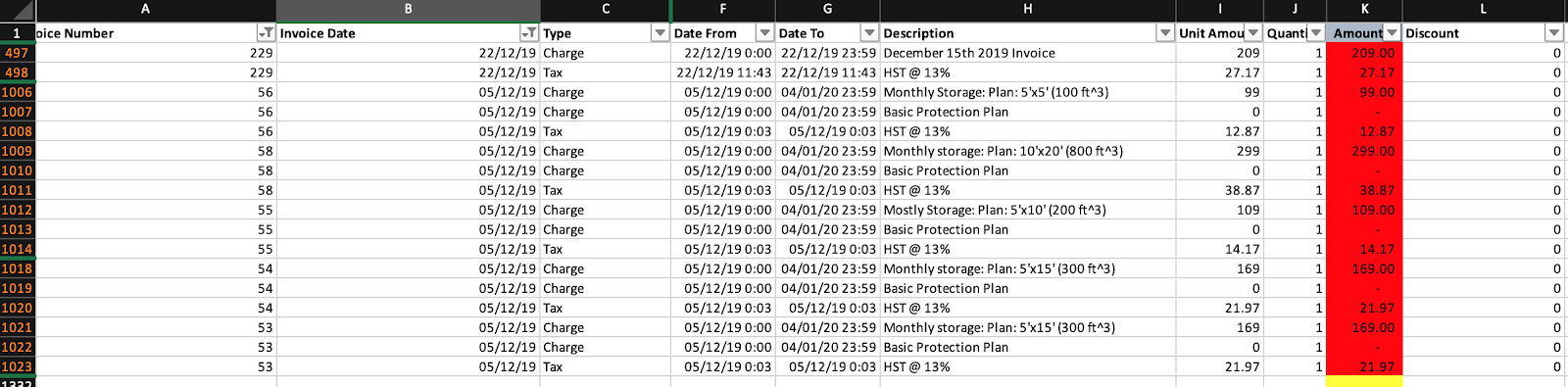
  2. Search for these invoices in the Line items tab and check for the corresponding discount value. (Specifically for the month of December 2019, there is no discount value associated with the voided invoices.)
    image
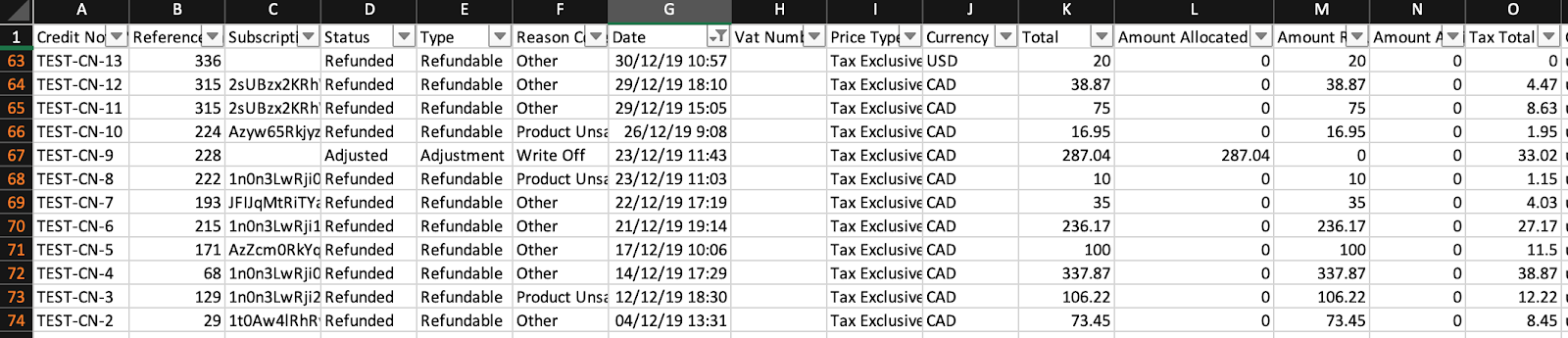
  3. Go to the Credit notes section and filter the invoices which were created in the month of December 2019 (Use column G for the filter). The below image shows the Credit Notes created in December 2019.
    image
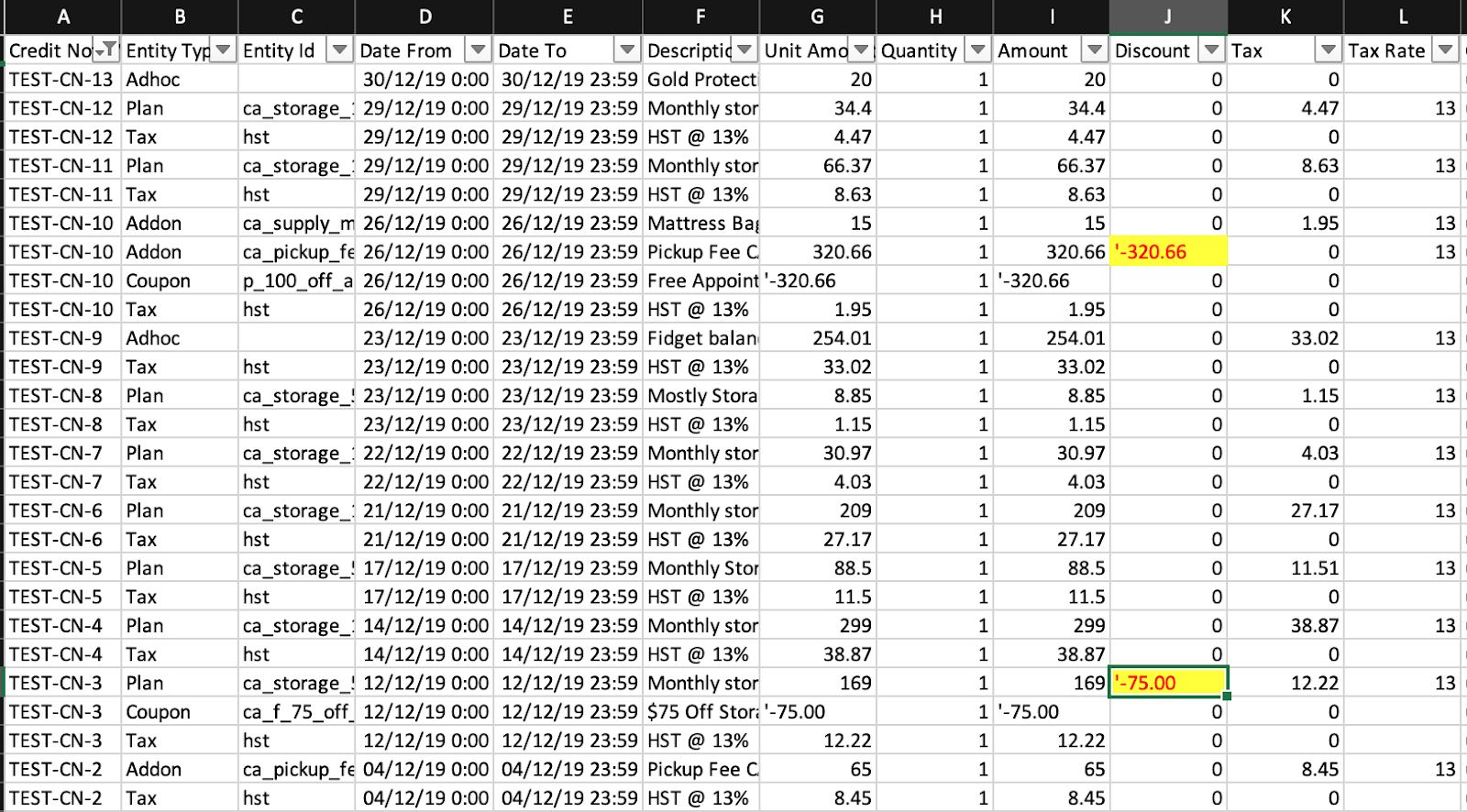
  4. Now search for the Credit Notes in the Line items tab and check for the corresponding discount value. (The discount value is highlighted in column-J.)
    image
  5. As specified in the image above, only the credit Notes TEST-CN-3 and TEST-CN-10 have a discount value associated with them.

Related Articles

What kind of reports does Chargebee offer?
Can I filter my reports? Also, how to export data and lists in CSV format?
What time zone does Chargebee follow for updating reports?
What is the Revenue Story in Chargebee?
Can the Chargebee dashboard be customized?
How does consolidated invoicing affect my new sales report?
What are the various versions of Revenuestory?
Who can access Revenuestory?
What is Dashboard in Revenuestory? What are the various dashboards available?
What is the difference between Monthly and Rolling 30 days granularity in Revenuestory?
What are Alerts and Goals in Revenuestory?
Email address not valid in Revenue Story
When site filter feature is activated what will happen to the existing consolidated sites?
Can I edit the layout of the labels?
How to determine the time period of payments and adjustments for a specific invoice?
When site filter feature is activated what will happen to the existing consolidated sites?

Show more

Was this article helpful?